Members Area   |   Contact Us
East Dorset Sailing Club
Celebrating 150 years - 1875 - 2025

Advent Calendar 2025 – Day 24
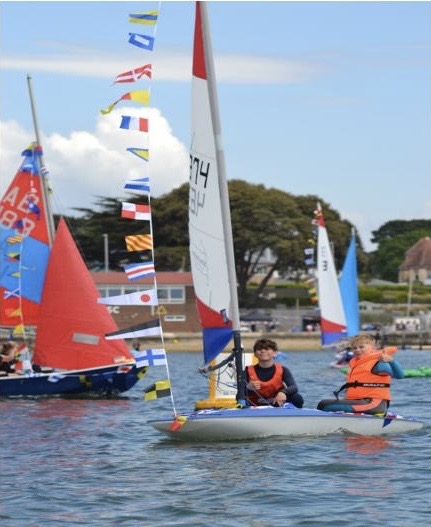
“Sailing Close to the Wind” In sailing, this term refers to steering a vessel as close as possible to the direction the wind is blowing from, a technique requiring precision to avoid stalling in “irons.” While this allowed ships to move quickly, it left little room for error. Figuratively, the phrase now means engaging in … Read more

Advent Calendar 2025 – Day 23

“Posh” This term is thought to be an acronym for “Port Out, Starboard Home,” referring to the most desirable cabins on ships traveling between Britain and India during the colonial era. These cabins, located on the port side on the outward journey and the starboard side on the return, were shaded from the sun’s intense … Read more

Advent Calendar 2025 – Day 22

“Under the Weather” This phrase, now used to describe feeling ill or unwell, originates from the challenging conditions aboard early naval vessels. Sailors assigned to the “weather” side of the bow being exposed to waves, wind, and the ship’s constant pitching-often finished their watch drenched and exhausted. These sailors were said to be “under the … Read more

Advent Calendar 2025 – Day 21

“Over the Barrel” Punishment aboard a ship often involved flogging, and the condemned sailor was frequently tied over the barrel of a deck cannon, to a grating, or to the mast. The phrase now describes a situation where someone is at a disadvantage or entirely at another’s mercy. Written by Lindsey

Advent Calendar 2025 – Day 20

“Mainstay” In the rigging of any sailing yacht but particularly the tall ships of old, the mainstay was a vital rope running from the maintop to the foot of the foremast, providing essential support to the mast and the ship’s structure. Without it, the vessel’s stability was compromised. Today, “mainstay” describes something or someone that … Read more

Advent Calendar 2025 – Day 19

“Hard Up” This expression has its roots in “hard over,” a term used to describe turning the ship’s helm as far as it could go. Sailors extended the phrase to “hard up in a clinch and no knife to cut the seizing,” a grim description of being in a bind with no way out. Today, … Read more

Advent Calendar 2025 – Day 18

“Footloose” The bottom edge of a sail is called the “foot.” If it’s not securely fastened, it flaps freely in the wind, hence the term “footloose.” This nautical phrase has evolved to signify freedom or a lack of constraints. Written by Lindsey

Advent Calendar 2025 – Day 17

“First Rate” This term for excellence originated from the 16th-century British Navy, where ships were classified by the number of heavy guns they carried. The largest, with 100 or more guns, were deemed First Rate and served as the backbone of the fleet. Smaller ships, like frigates, were ranked from second to sixth rates. Over … Read more

Advent Calendar 2005 – Day 16

“Nippers” A short length of rope was used to bind an anchor cable to a messenger line for hauling the main anchor cable which was too thick for the capstan, so the messenger line was used to drag the cable along. The process was called “nipping,” and required small agile boys to hang over the … Read more

Advent Calendar 2025 – Day 15

“Dead Reckoning” Still a vital navigation method for sailors today, dead reckoning relies on estimating a ship’s position based on previous positions, speed, and direction. Before modern technology, sailors used this technique to chart their course, adjusting for wind and current. Though less common now, the phrase remains tied to calculated risk and estimation. Written … Read more